.
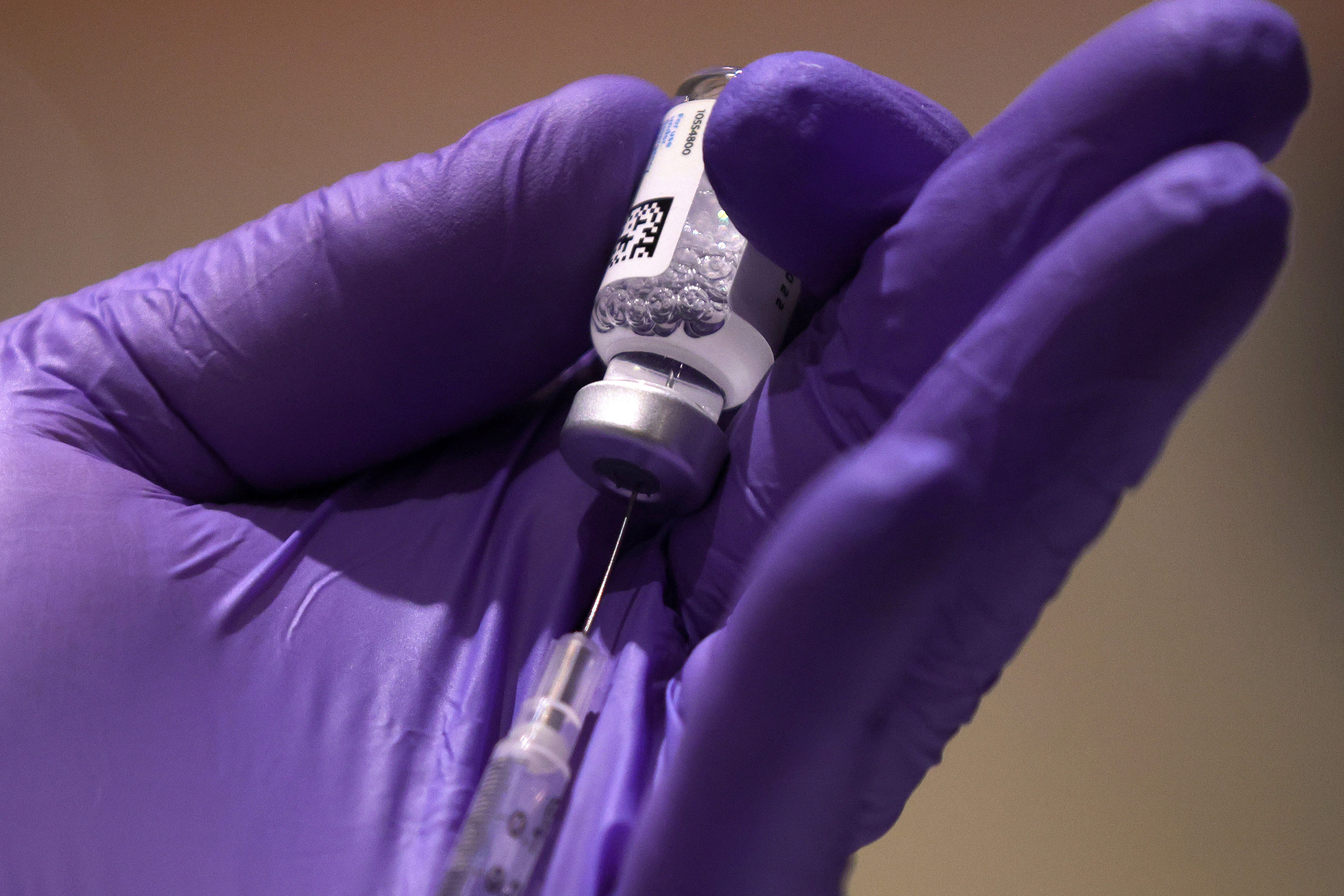
Uncommon however unsafe adverse effects from vaccines can provide a difficult predicament for public health authorities. In this case, the dangerous embolism, accompanied by a strangely low count of clot-promoting platelets, appear to strike about 2 people per million individuals immunized with J&J’s shot and about one per100,000getting AstraZeneca’s. Both are small dangers, compared to COVID-19 itself, which, by one quote,eliminates approximately 2 individuals out of 1,000 contaminated( though casualty rates differ significantly by age, place and other aspects). On one hand, it is vital to be transparent with the general public– and to alert healthcare companies to the issue and recommend them on how finest to recognize and treat it. On the other hand, there is a possibility of sowing baseless doubts about these vaccines and maybe others too, irritating currently uneasy levels of vaccine hesitancy
” The minute you have actually informed individuals that there’s a threat, even if it’s one in a million, I believe what they hear is ‘That might occur to me,'” states pediatrician and vaccine scientist Paul Offit, director of the Vaccine Education Center at Kid’s Health center of Philadelphia.
The discovery of the thickening concerns– in early March for AstraZeneca and early April for J&J– triggered emergency situation conferences of health authorities in the U.S. and Europe and stops briefly in circulation of both vaccines in nations all over the world. By April 23 public health authorities in both areas concluded that the advantages of these vaccines far go beyond the threats and that circulation need to resume, albeit with brand-new labels cautioning about the really uncommon blood embolisms.
Whether the stops briefly were warranted refers argument, offered the immediate requirement to stem a fatal international pandemic. As a concern of pure mathematics, specialists state the response is plainly no. “Out of a theoretical million individuals who get this vaccine,” simply a couple of will suffer the strange embolisms, Offit mentions. “However out of a theoretical million individuals who get COVID, thousands will pass away.”
Among the most difficult concerns for health authorities is a mental one: To what degree can the general public make useful sense of a really unusual– however extremely frightening– possible negative effects? “Many people are risk-illiterate,” states psychologist Gerd Gigerenzer, director of the Harding Center for Danger Literacy at the University of Potsdam in Germany. “A a great deal of research studies reveal that normal individuals are puzzled by relative dangers, chances or percentages.” Research study shows that we are especially apt to overstate the possibility of an unusual occasion if it is brand-new and lethal and has actually been enhanced by the news media, states psychologist Baruch Fischhoff, a teacher of engineering and public policy at Carnegie Mellon University and an authority on how to interact health threats.
Both Fischhoff and Gigerenzer think health authorities can assist prevent such confusion by offering extremely clear, well-formulated info to the general public– something Fischhoff states U.S. and European health authorities might be doing better. “The majority of people have no issue comprehending danger if you, the specialist, do your task right,” he firmly insists. “Provide mathematics an opportunity!”
Mathematics Obstacle
Word of the clotting issue initially started straining in late February in connection with the AstraZeneca vaccine, which is not yet authorized in the U.S. By March 22 the European Medicines Firm (EMA) understood 86 cases, 18 of them deadly, in Europe and the U.K.— an exceptionally little number relative to the 25 million individuals who had actually gotten the vaccine at that point. The cases were focused in ladies listed below the age of 60.
This month U.S. health authorities started getting reports of comparable cases connected to the J&J injection, a single-dose vaccine that has actually been offered to about 8 million individuals in the nation. A minimum of 15 thickening cases have actually been reported, all in females more youthful than 60, and a minimum of 3 have actually been deadly.
In Europe, the AstraZeneca findings set off a patchwork action. More than 20 nations stopped dispersing that vaccine for a week or more. Many resumed, with a range of brand-new suggestions that the vaccine be utilized just for grownups older than 55, 60 or 65– or, when it comes to the U.K., that grownups under age 30 ought to choose other vaccines. The EMA, nevertheless, has actually not backed any age constraints, nor has it mentioned that more youthful ladies need to prevent selecting AstraZeneca– positions mirrored by U.S. authorities with regard to the J&J vaccine.
In the U.S., the J&J time out lasted 10 days. Leaders at the Centers for Illness Control and Avoidance and the Fda discussed that they required time to examine the embolism cases and were acting “out of an abundance of care.”
That expression did not agree with a variety of health interaction specialists. “It makes it seem like there’s no disadvantage [to the pause], when in truth there can be a considerable drawback,” states Glen Nowak, director of the Center for Health and Danger Interaction at the University of Georgia and previous chief of vaccine interaction at the CDC. Amongst the most significant issues was the effect of losing the one-dose, easy-to-transport J&J vaccine for usage in rural neighborhoods, individuals experiencing homelessness and other hard-to-reach groups. “We were utilizing the J&J vaccine with susceptible populations and short-term populations, where individuals may not have the ability to return for a 2nd dosage,” Nowak states.
For the general public to understand such choices, Fischhoff states, health authorities have a responsibility to describe, with particular numbers, whether less individuals will likely be damaged with a time out than without it– a price quote he states they can fairly make, despite the fact that it will differ from location to location. They ought to likewise describe how positive they remain in their info. In his view, preliminary descriptions for the vaccine stops briefly were “an enormous interactions failure.” Since publication time, the CDC has actually not reacted to Scientific American‘s ask for remark.
Both the CDC and the EMA did launch some info about relative damage. At an April 23 virtual media occasion describing the choice to resume utilizing the J&J vaccine, CDC director Rochelle P. Walensky kept in mind that each million dosages of J&J vaccine offered to females ages 18 to 49 would avoid 650 hospitalizations and 12 deaths from COVID while potentially triggering about 7 cases of embolism. The EMA has actually gone even further: it released a in-depth (if rather complicated) set of infographics comparing such data for the AstraZeneca vaccine, breaking them down by age and by the occurrence of the coronavirus. In locations with a high occurrence of infection, a million dosages of the vaccine provided to grownups in their 30 s would avoid 81 hospitalizations for COVID and might include 1.8 cases of clotting. For individuals in their 80 s, the price quotes were 1,239 avoided hospitalizations and 0.4 clotting cases.
Can many people follow this type of mathematics? Gigerenzer’s work has actually revealed that providing details in just composed tabular kind– what he and his partners call “ reality boxes“– can assist individuals more quickly weigh threats versus advantages for vaccines and other health interventions. Well-crafted infographics that aesthetically show relative danger, such as those produced by the Winton Center for Threat and Proof Interaction at the University of Cambridge, which were the designs for the EMA’s charts, likewise assistance. In the longer term, Gigerenzer thinks far more can be done to inform the general public, starting in youth, in how to think of danger and possibility. And he keeps in mind that there is another lesson that would go a long method towards assisting individuals understand what a one-in-a-million negative effects symbolizes: we require to be taught that nearly absolutely nothing comes without threat.
At the April 23 press conference, the CDC’s Walensky acknowledged the immediate requirement for great interaction to assist individuals examine vaccine advantages and threats. “We need to do remarkable outreach to clients, to satisfy individuals where they’re at, to inform them,” she stated.
The supreme effect of the stops briefly and of the unequal messaging about the negative effects stays to be seen. There is factor to stress, states Heidi J. Larson, director of the Vaccine Self-confidence Task, a research study company that tracks international views of vaccines. In the weeks after European countries suspended usage of the AstraZeneca vaccine, she states, “we saw a sheer drop in vaccine self-confidence in Africa”– where that shot had actually been anticipated to end up being an essential. A Washington Post— ABC News survey, carried out throughout the J&J time out, recommends comparable damage has actually been performed in the U.S.: just 22 percent of unvaccinated Americans stated they would want to take the J&J shot. Larson and others stress that baffled and worried individuals typically rely on undependable sources on vaccine security. “If they’re not getting clear responses,” Larson states, “it simply leaves eviction large open for false information and disinformation. Individuals fill that area with their own plot.”
Find Out More about the coronavirus break out from Scientific American here And check out protection from our global network of publications here





No comments:
Post a Comment