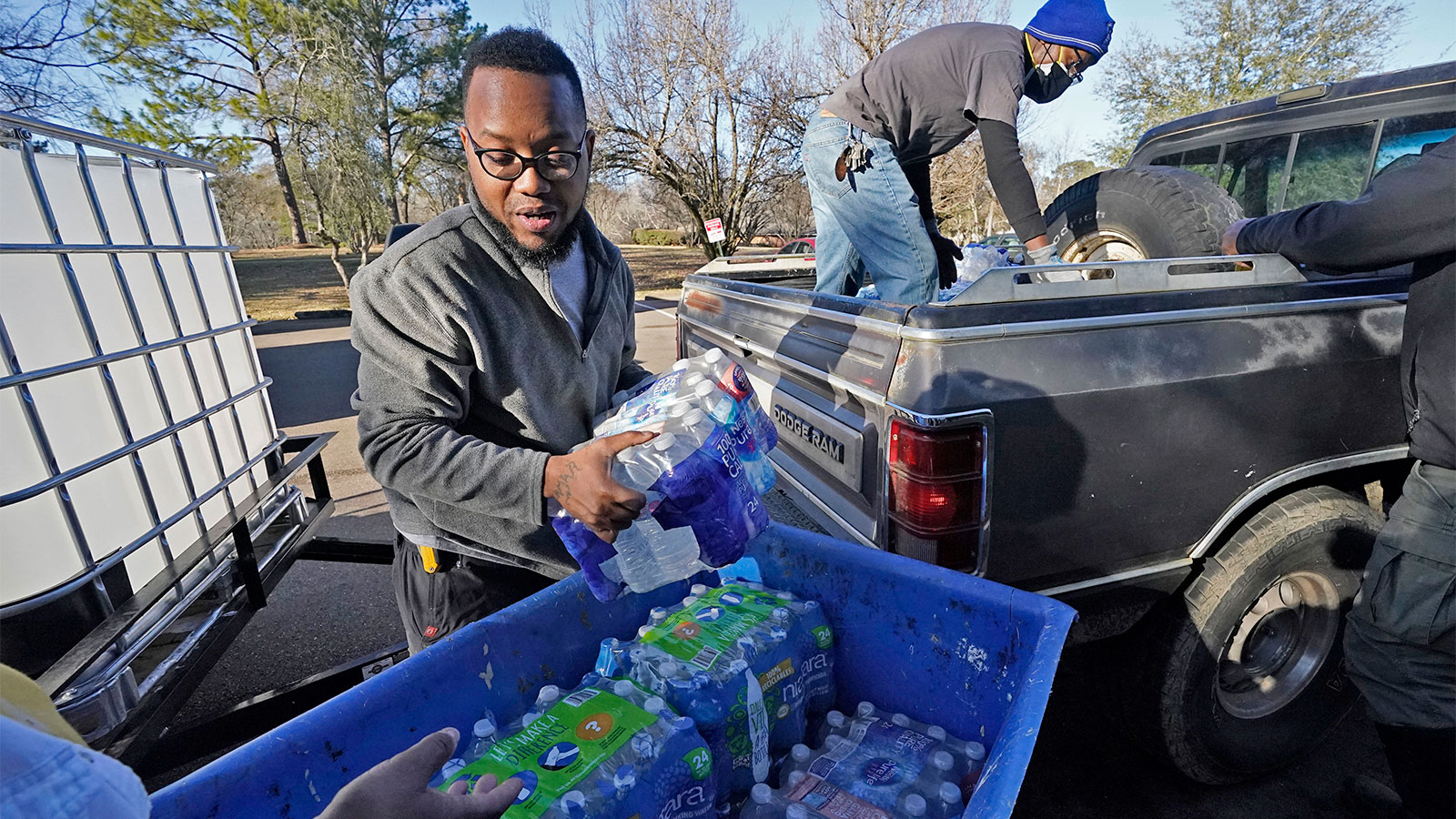
Texas’ experience of last month’s deadly winter storm might have grabbed headings, but its neighbors fared just as severely. Two weeks after the storm first touched Mississippi– and one week after the state’s governor announced that he would “bring back clean water”– countless residents in the capital city, Jackson, are still without water; even those fortunate sufficient to have running water are officially recommended to boil it before use. City authorities have reported that blockaded roads have avoided them from getting the chemicals required to treat the water, which the city’s distribution system was overwhelmed attempting to deliver water to numerous people simultaneously, given the number of were left homebound by the storm.
Some parts of the state were as cold as 20 degrees F, the coldest recorded temperature in Mississippi history. Hundreds of thousands of state locals suffered power interruptions, unheated houses, and water shutoffs as pipes froze, water treatment sites lost power and leaked, and energy service providers stopped working to meet demand.
Governor Tate Reeves blamed the state’s problems on aging facilities, including bad structure insulation and an out-of-date water system. The water system problems, he said in a press conference, go back to “50 years of neglect and disregarding the difficulties of the pipes and the system.” Large parts of the state get some of their water from the Mississippi River, which for many years has been contaminated by wastewater, farming runoff, and fertilizer The state’s water treatment system has been pestered by regular water pipe breaks, century-old pipes, and a failure to weatherize plants’ devices. Locals have actually long acknowledged these problems; for years, a souvenir tee shirt has brandished the expression “ Welcome to Boil Water Alert, Mississippi” So it came as not a surprise when Reeves told locals not to anticipate over night repairs.
Candace Abdul-Tawwab, assistant director of the Jackson-based Individuals’s Advocacy Institute, or PAI, told Grist that local and state leaders need to much better prepare the state’s facilities, roadways, structures, and natural lands from the dangers presented by environment modification. Early indications of a robust federal government response were not motivating: Shortly after February’s storm hit, Jackson Mayor Chokwe Antar Lumumba, a Democrat, accused Republican Guv Reeves of not answering his calls for support. The state’s climate difficulties will just end up being more pushing: Mississippi, the state with the largest share of Black residents in the country, deals with some of the nation’s most severe dangers from extreme heat and seaside flooding.
” Everyone must be taking a look at the South right now, particularly communities of color in the South, to see what climate change is doing and going to continue doing in America,” Abdul-Tawwab told Grist. “These problems existed long before the winter storm and the attention concentrated on Texas.”
Though PAI’s work is focused broadly on concerns like criminalization and financial inequality, Abdul-Tawwab said that ecological justice undoubtedly figures into the company’s work, provided the challenges facing Jackson and other poor Black communities throughout the U.S. While President Joe Biden’s federal catastrophe declaration was restricted to Texas, PAI and other neighborhood organizations helped Mississippians gain access to food, water, and shelter after they were left in the dark. In the previous 2 weeks, PAI has crowdsourced funds to assist house rooted out households in hotels, deliver water bottles to homes, and look for whatever from infant diapers to fresh fruit for those not able to trek through roadways made blockaded by snow and ice.
” Mississippi is often overlooked.
Jackson, a city with one of the largest percentages of Black individuals in the country and a hardship rate that is nearly 3 times the national average, bears an out of proportion share of both financial and ecological burdens. According to the Environmental Security Agency’s environmental justice screening tool, which maps contamination vulnerabilities across the country, Jackson locals are in the 95 th percentile for cancer risk from air pollution and live closer to contaminated water sources than 70 percent of the nation.
” Without intervention, these natural catastrophes will wipe out any chance people having the ability to even try to continue to make it,” said Abdul-Tawwab.
That intervention does not seem forthcoming: Jackson city officials estimate the costs for water supply upgrades, specifically weatherizing devices at water plants and changing old pipelines, to be $2 billion, however they’ve admitted they do not have the monetary methods to perform the updates. And despite the fact that many residents still lack fundamental energies that could enable them to prevent COVID-19 exposure, Guv Reeves revealed Tuesday that the state is lifting all rules associating with organization capability and all county mask requireds.




No comments:
Post a Comment